Silencing a brain circuit in teen mice leaves them less social as adults
By The Ohio DigestPublished
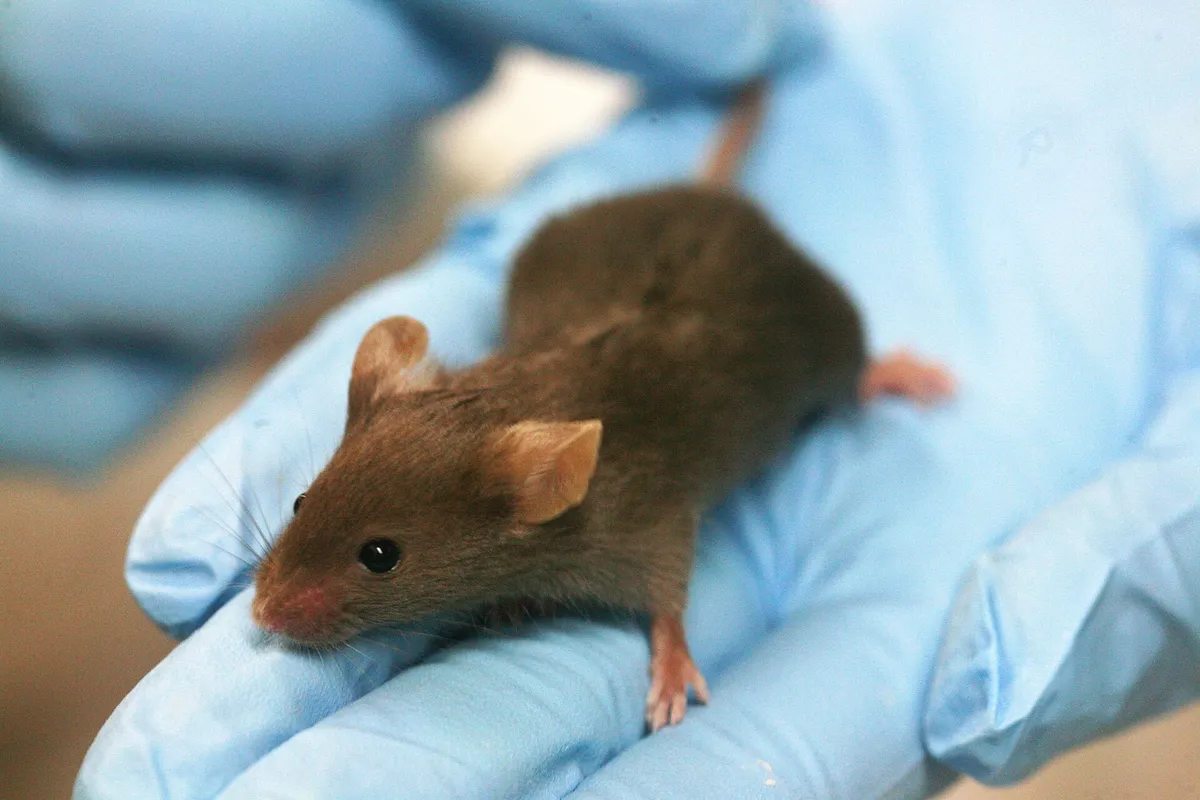
Briefly silencing one brain pathway in adolescent mice left them with less drive to socialize as adults, Ohio State University researchers found, while doing the same to adult mice caused no lasting change.
In an Ohio State report on the study, the researchers said their findings point to a circuit known as PFC-vSTR, which does much of its key developing in the teen years and may help set how strongly an animal seeks out company.
Scientists watch that stretch of life closely because of what often starts there. "Many psychiatric disorders, including depression and schizophrenia, first appear during adolescence," said Laurence Coutellier, who runs the lab in Ohio State's Department of Psychology where the study was done.
Coutellier holds an associate professor's post and works in behavioral neuroscience. Such conditions often bring social difficulties or withdrawal, Coutellier said.
Signals in the pathway run from the prefrontal cortex, at the front of the brain, to the ventral striatum, an area linked to reward, motivation and pleasure.
Of the prefrontal cortex, Coutellier said "it’s the last brain region to mature," and it isn't fully developed until around age 25.
Mice make the question easier to study. Their adolescence lasts roughly three weeks, so researchers can follow an animal's social behavior over its whole life.
For a baseline, the team filmed two unfamiliar mice sharing a cage. As predicted, adolescents showed more social motivation than adults did.
Next, using a method that switches specific neurons on or off, the researchers temporarily dampened activity in the pathway. They did it in both male and female mice.
Mice that had the circuit quieted as adolescents grew up less eager to socialize.
Adults were another story. When the same circuit was quieted in grown mice, their social investigation dipped only briefly, for just as long as the intervention was active.
Coutellier put the result this way: "if we prevent the maturation of the frontal circuit to the striatum, when mice reach adulthood they have impaired social motivation."
Katrina Lin, the lead author, is a doctoral candidate who works as a graduate research assistant in Coutellier's lab. At Neuroscience 2026, the Society for Neuroscience's yearly conference, Lin displayed early results on a poster.
A Whitehall Foundation Grant paid for the research.
Animal work can't fully mirror how people behave, Coutellier cautioned. It does let scientists alter particular brain circuits and watch how behavior shifts as a result, Coutellier said.
"Mice do not have schizophrenia. Mice do not have depression. But there are some symptoms that we can try to assess," Coutellier said, naming social withdrawal and cognitive deficits as examples.
Coutellier also hopes to look at the pandemic years, when teens were told to stay home. "How did that impact this developmental trajectory of the social circuits?" Coutellier said.